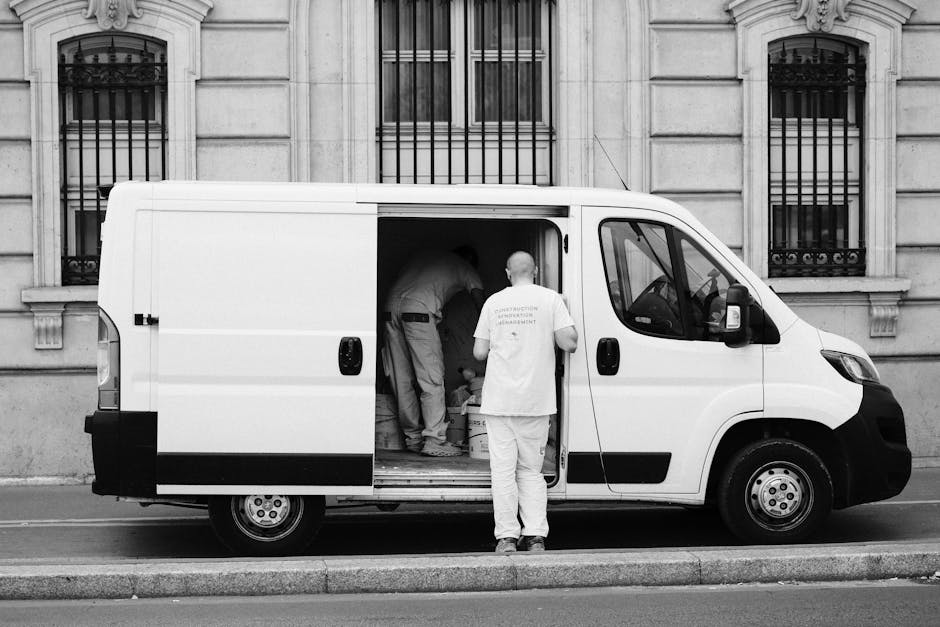
Hidden charges to avoid when booking Shacklewell man and van
Booking a man and van should feel simple. You ask for a quote, pick a time, and get on with the move. But in real life, the awkward bit is usually not the lifting. It is the little extras that appear later and leave you thinking, "Hold on, where did that come from?" If you are looking into hidden charges to avoid when booking Shacklewell man and van, you are already asking the right question. That one question can save you money, stress, and a very last-minute scramble on moving day.
In Shacklewell, where side streets can be tight, parking can be awkward, and access issues are rarely obvious until the van arrives, pricing needs to be clear from the start. This guide walks through the charges people most often miss, how they show up, what to ask before you book, and how to compare quotes properly without getting pulled into cheap-looking offers that are anything but cheap.
You will also find a practical checklist, a comparison table, and a few real-world examples based on the sorts of moving jobs people actually do around the area. Let's make the whole thing less confusing, shall we?
Why hidden charges to avoid when booking Shacklewell man and van matters
A cheap quote can be very persuasive. Truth be told, most people start by comparing the headline number. That is normal. But the final bill is what matters, and hidden charges are often the difference between a fair move and a frustrating one.
These extra costs matter for a few practical reasons:
- They can change your budget fast. A move that looked manageable can suddenly feel expensive.
- They often appear at the worst time. On moving day, you are busy, tired, and not in the mood to debate a surcharge.
- They are easy to miss in small print. Some quotes look detailed but quietly leave out the parts that cost the most.
- They create distrust. Even if the team does the lifting well, a surprise charge can sour the whole experience.
In a local area like Shacklewell, some of the most common fee triggers are access-related. Narrow streets, controlled parking, stairs, long carries from the front door, and waiting time all tend to show up in the final price if they were not discussed upfront. If you are moving from a flat near busier roads or around denser residential pockets, it is worth assuming that access will be part of the cost conversation.
Key takeaway: the best quote is not the cheapest one on first glance. It is the one that clearly tells you what is included, what may change, and what happens if the move turns out to be more complicated than expected.
How hidden charges to avoid when booking Shacklewell man and van works
Most hidden charges are not mysterious. They are usually the result of incomplete information, vague wording, or a quote that only covers the easiest version of the job. The problem is that moving is rarely that neat.
Here is how it tends to work in practice:
- You request a quote. You give the size of the move, the pickup and drop-off area, and maybe a rough idea of what needs moving.
- The company prices the obvious parts. That might include van time, driver time, and a basic loading allowance.
- Extra variables are left open. Things like stairs, waiting, extra stops, parking fees, or heavy items may not be fully discussed.
- The job starts. Then the driver discovers a tight stairwell, no loading space, or more boxes than expected. The price changes.
This is where many people get caught out. It is not always dishonesty. Sometimes it is simply a badly scoped job. But if you are the customer, the result is the same: a bigger bill than you planned for.
The safest approach is to treat the quote as a working estimate unless the provider states, in plain English, that the price is fixed and what that fixed price covers. If they are vague, ask more questions. A decent company should expect that. If anything, it shows you are organised.
Common hidden charge triggers
- Minimum call-out charges that apply even if the job finishes early
- Extra time charges if loading or unloading takes longer than planned
- Stair fees when there is no lift or the lift is not usable
- Long carry fees when the van cannot park close to the door
- Waiting time fees if keys are late or the property is not ready
- Fuel or mileage supplements outside a basic travel radius
- Congestion or parking costs if they are not included in the quote
- Heavy item surcharges for awkward pieces such as wardrobes, safes, or pianos
- Assembly and disassembly extras for beds, tables, or flat-pack furniture
- Weekend or evening premiums for less standard booking times
Some of these charges are perfectly reasonable when clearly explained. The issue is not the charge itself. It is the surprise.
Key benefits and practical advantages
Being alert to hidden charges gives you more than just savings. It changes the way you book, plan, and compare services. And, to be fair, it usually makes the whole move feel calmer.
1. You can compare quotes properly
A GBP120 quote and a GBP160 quote might not mean what you think. The cheaper one may exclude stair carry, while the more expensive one includes it. Once you compare like for like, the better value becomes obvious.
2. You reduce moving-day stress
When the price is understood in advance, there is less awkward haggling in the driveway while the kettle boils and the boxes stack up by the door. That alone is worth something.
3. You can plan around local access issues
Shacklewell streets and nearby roads can bring practical headaches: busy parking, tight corners, narrow entrances, or a few flights of stairs that looked harmless on the phone. Knowing the likely extras helps you prepare the property and avoid surprises.
4. You make better decisions about service level
Once you understand what is charged separately, you can decide whether you need a basic man and van, full removals support, packing help, or something closer to a furniture removals service. That saves you from paying for the wrong level of help.
5. You protect your budget for the rest of the move
Moving costs do not stop at the van. There are boxes, cleaning, deposits, time off work, and all the little bits people forget until they are standing in a half-packed room. Keeping transport costs predictable helps the rest of the move breathe a little.
Who this is for and when it makes sense
This advice is useful for almost anyone booking a local move, but it matters most if your move has any of the following:
- a flat with stairs or no lift
- a short notice booking
- limited parking outside either property
- large or heavy furniture
- more than one pickup or drop-off point
- uncertain access at either end
- a packed schedule where delays would hurt
It is especially relevant for renters, students, first-time movers, and anyone moving within East London where access can change from one street to the next. If you are moving from a compact flat, a studio, or a shared house, you may think the job is simple. Then the van arrives and the sofa will not fit down the stairs without a bit of work. You get the idea.
It also makes sense if you are comparing a man and van against a larger removal service, or deciding whether a basic quote is enough or whether you need a more complete package like flat removals. Sometimes paying slightly more upfront is cheaper than stacking on add-ons later.
Step-by-step guidance
If you want to avoid surprise fees, the best approach is simple and methodical. Nothing fancy. Just a proper ask-the-right-questions routine.
Step 1: Give a full description of the move
Do not just say "a few boxes and a sofa." Say how many rooms, what furniture, how many floors, whether there is lift access, and whether parking is close to the door. The more complete your description, the less room there is for a pricing mismatch later.
Step 2: Ask what the quote actually includes
This sounds basic, but it is where many hidden charges are exposed. Ask whether the quote covers:
- loading and unloading
- stairs
- waiting time
- mileage or fuel
- parking
- assembly or disassembly
- wrapping or protective materials
If you are not sure, ask again. A clear answer is a good sign. A vague answer usually is not.
Step 3: Check for extra fees on awkward items
Heavy or fragile items often cost more. That might include pianos, large mirrors, American-style fridges, or oversized wardrobes. A standard man and van service may move them, but the quote should say whether specialist handling or extra labour is needed.
Step 4: Confirm access at both addresses
Access issues are one of the biggest causes of price changes. Think about loading bay restrictions, tight staircases, key collection delays, and whether a van can stop legally near the property. If the move is near busier roads, it is worth checking all this before booking.
Step 5: Clarify timing and flexibility
Ask what happens if the job takes longer than expected. Is there an hourly rate after the first block? Is there a minimum charge? Is there a fee for arriving at peak time? This one question can save a lot of confusion later.
Step 6: Get the quote in writing
Even a short email or message is better than a verbal estimate you will misremember two days later. Written quotes make it easier to check what was agreed if anything changes.
Step 7: Prepare the property properly
Box small items in advance, disassemble what you can, and clear hallways. If you do your bit well, you reduce the chance of extra labour time being added. It sounds obvious. Yet plenty of moves get delayed by one last drawer full of miscellaneous bits.
Expert tips for better results
Here are the practical things that make the biggest difference in real bookings. Not theory. Just the stuff that tends to save money.
Be specific about the difficult bits
Most customers remember the easy details and forget the awkward ones. Mention the sofa that barely turns in the hallway, the basement storage unit, the heavy dining table, or the fact that parking outside is usually full by 8am. That kind of detail matters.
Separate "nice to have" from "must have"
Do you need packing help, or just transport? Do you need a second mover, or can one person and a careful plan do the job? Over-ordering services is another form of hidden cost, even if it does not look like one at first.
Watch out for vague phrases
Terms like "subject to conditions," "from price," or "basic coverage only" can hide the real cost of the move. Not always, but often enough to be worth checking. If the wording feels slippery, ask for clarification.
Book the right vehicle size
An under-sized van can lead to multiple trips, extra time, and more labour. An over-sized one may be unnecessary. A good provider should help you choose the right balance rather than just sending the biggest van and hoping for the best.
Use a local service that knows the area
A local team will usually have a better feel for parking patterns, access pinch points, and realistic timing. That does not make them perfect, obviously, but it helps. In neighbourhoods like Shacklewell, a few minutes of local knowledge can save a lot of fuss.
Keep a small buffer in your budget
Even the best-planned move can throw up one or two extras. A sensible buffer is better than being caught out and trying to negotiate while the van is idling outside. That never feels good. Never.
Common mistakes to avoid
Most bad experiences with moving quotes come down to a few repeat mistakes. They are easy to make, which is exactly why they are worth naming clearly.
- Only comparing the headline price. The cheapest quote is often missing something important.
- Not mentioning stairs or lift issues. This is a classic cause of added charges.
- Assuming parking is free and easy. In reality, it may cost time, permits, or a long walk from the van.
- Forgetting about waiting time. If keys are delayed or the property is not ready, the clock may keep ticking.
- Skipping the written confirmation. A spoken promise is easy to misunderstand.
- Leaving packing until the last minute. A late start can create time pressure and extra labour.
- Not checking insurance and responsibility limits. If something goes wrong, you want to know where you stand.
There is also a smaller, sneakier mistake: assuming that a friendly chat means the quote is fixed. Friendly is good. Clear is better. Friendly and clear is best, by a mile.
Tools, resources and recommendations
You do not need special equipment to avoid hidden charges, but a few simple tools make the process much easier.
- A room-by-room inventory. Write down what is being moved so nothing gets forgotten.
- A floor plan or quick sketch. Very handy if large furniture needs careful positioning.
- Photos of difficult items. A picture of the stairs, hallway, or bulky sofa can help the provider quote more accurately.
- Box labels. These reduce loading confusion and save time on arrival.
- A simple moving day timeline. It helps you keep pace and avoid unnecessary waiting.
For related planning, you may also find it useful to look at pricing and quotes before booking, especially if you want to understand how rates are put together. If your move involves storing items between locations, the same kind of thinking applies to storage too, because access and timing can affect cost there as well.
If you are arranging a longer or more complex move, services such as home moves or house removals may be more appropriate than a basic man and van booking. The key is choosing the right service before the hidden costs start creeping in.
Law, compliance, standards, or best practice
For most customers, the main concern is not a legal lecture. It is simply knowing that the provider is operating responsibly and that the quote is honest. Still, a few best-practice points are worth keeping in mind.
A reputable removals provider should be clear about:
- what is included in the price
- how extra time is charged
- what happens if access is more difficult than expected
- their insurance and handling approach
- how complaints are handled if something goes wrong
It is sensible to check the provider's pages for items like insurance and safety, terms and conditions, and the complaints procedure. Those pages can tell you a lot about how seriously the company treats transparency.
Also, if a move involves carrying through common parts, it is worth being mindful of building rules, neighbour access, and parking restrictions. Those are not just admin details. They can affect costs, timing, and whether the job proceeds smoothly. Nobody wants a tense conversation with a neighbour at 7:30 in the morning. Nobody.
Options, methods, or comparison table
Different booking approaches suit different moves. Here is a simple comparison to help you think it through.
| Booking approach | Best for | Risk of hidden charges | What to check |
|---|---|---|---|
| Hourly man and van | Small-to-medium local moves | Medium | Waiting time, stairs, travel time, extra stops |
| Fixed-price quote | Moves with clear details and access | Low to medium | What is included, exclusions, and change terms |
| Full removals service | Larger homes or complex moves | Lower if well scoped | Packing, insurance, access, specialist items |
| Same-day booking | Urgent or emergency moves | Higher | Availability, surcharge, and timing flexibility |
If you need speed rather than absolute precision, a service like same-day removals can be useful, but it is especially important to ask about surcharges and minimum fees. Urgency can be convenient, yet convenience sometimes comes with a little price tag attached. That is just the way it is.
Case study or real-world example
Here is a typical local scenario.
A renter in Shacklewell books a man and van for a one-bedroom flat move. The quote looks great: simple, competitive, and quick to accept. But the job has a few complications the customer did not mention at first. The flat is on the third floor, there is no lift, the van cannot stop directly outside, and the sofa needs partial disassembly to get through the stairwell.
On moving day, the team arrives and realises the access is slower than expected. The provider adds extra time and a stair carry charge. The customer is frustrated, not because the work was unreasonable, but because the quote never reflected the real job.
Now compare that with a better-scoped booking. The customer sends photos of the staircase, explains the parking situation, lists the larger items, and asks whether the quote includes stairs and long carries. The provider prices it more accurately from the start. The quote may be slightly higher, but the final bill matches the expectation. That is the difference hidden charges make.
One small detail can change everything. A quick photo of the front door, a note about the lift, or a mention of the narrow hallway can save you more than you might think.
Practical checklist
Use this before confirming your booking. It is simple, but it works.
- Have I described every item that needs moving?
- Have I said whether there are stairs, lifts, or long carries?
- Have I checked if parking near the property is realistic?
- Do I know whether waiting time is charged?
- Do I know if fuel, mileage, or congestion costs are included?
- Have I asked about extra charges for heavy or awkward items?
- Do I understand whether assembly or disassembly costs extra?
- Have I asked if the quote is fixed or estimate-based?
- Have I asked for the price in writing?
- Do I know what happens if the move takes longer than expected?
- Have I checked insurance and safety information?
- Do I understand the complaints process, just in case?
If you can tick all of those boxes, you are in a much stronger position. Not perfect, perhaps, but much stronger.
Get a free quote today and see how much you can save.
Conclusion
The best way to avoid hidden charges when booking a Shacklewell man and van is to be clear, specific, and a little bit stubborn about the details. Ask what the quote includes. Ask what it does not include. Ask what changes the price. Then get it in writing.
That approach protects your budget, reduces stress, and helps you choose the right service for the actual move rather than the ideal version of it. Whether you are moving a few boxes, a sofa, or a whole flat's worth of things, a transparent quote is worth far more than a cheap headline number.
And if you do nothing else, remember this: the calmest move is usually the one where the money side was sorted before the van arrived. A small bit of effort now saves a lot of bother later. That's the real win.
Frequently Asked Questions
What are the most common hidden charges in a man and van booking?
The most common ones are waiting time, stairs, long carries, extra mileage, parking costs, heavy item fees, and charges for assembly or disassembly. They are not always unreasonable, but they should be explained clearly before you book.
How do I know if a quote is fixed or just an estimate?
Ask the provider directly and request written confirmation. A fixed quote should say what is included and what might still change. If the answer is vague, treat it as an estimate and ask follow-up questions.
Do stairs always cost extra?
Not always. Some companies include stairs in their base rate, while others charge separately depending on floor level and access. It is one of the first things you should confirm, especially in flats without lifts.
Is parking usually included in the quote?
Sometimes, but not always. Parking can be included, estimated, or charged separately if the driver has to pay for a bay or deal with restricted access. In busy local streets, this is worth checking in advance.
Why do some man and van quotes look cheaper than others?
Often because they leave out parts of the job. A low headline price can exclude stairs, waiting time, or fuel, which makes the quote look better at first and worse later.
Can I reduce the risk of extra charges by preparing better?
Yes. Packing in advance, giving a full inventory, clearing access routes, and mentioning awkward items all help keep the job smooth. The more accurate your information, the less likely the quote will need adjusting.
Should I send photos before booking?
Yes, if you can. Photos of the stairs, entrance, bulky furniture, or parking situation make a big difference. They help the provider judge the real effort involved and reduce the chance of later price changes.
What if the move takes longer than planned?
That depends on the booking terms. Some providers charge an hourly rate after the initial period, while others may have a minimum or additional block charge. Always ask before the move starts.
Are weekend and evening moves more expensive?
They can be. Some companies apply premium rates for less standard hours. If your schedule is flexible, ask whether moving at a different time could reduce the price.
Is it better to choose the cheapest quote?
Not automatically. The cheapest quote may be the most expensive in the end if important parts are missing. A clearer quote with fewer surprises is usually better value.
How do I compare man and van quotes properly?
Compare what is included, not just the total. Check stairs, mileage, waiting time, parking, fuel, and extra labour. If one quote covers more than another, it may actually be the better deal.
What should I do if I think I have been charged unfairly?
Start by checking the written quote and the terms and conditions. Then raise the issue calmly with the provider and follow their complaints process if needed. Keeping the quote in writing makes this much easier.